Call Anytime

Call Anytime
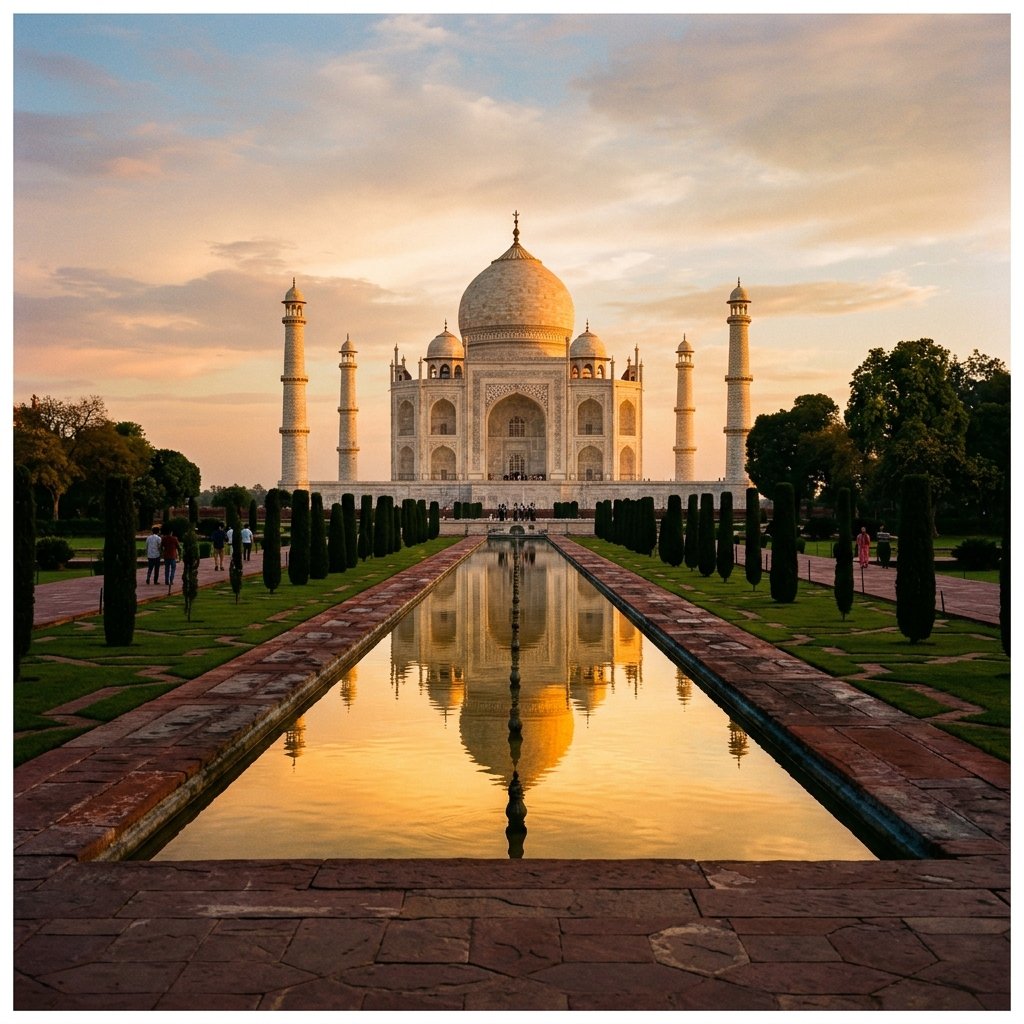
There are few experiences in the world that can match watching the sunrise at the Taj Mahal. As the first rays of light touch the white marble dome, the monument transforms through a palette of colours — from soft pink to warm gold to brilliant white — creating a spectacle that has captivated visitors for centuries.
Built between 1632 and 1653 by Mughal Emperor Shah Jahan as a mausoleum for his beloved wife Mumtaz Mahal, the Taj Mahal is considered the finest example of Mughal architecture, combining elements from Islamic, Persian, Ottoman Turkish, and Indian architectural styles.
To witness the sunrise, arrive at the east gate (Shilpgram) at least 30 minutes before opening time. The gates open at sunrise, and being among the first visitors allows you to experience the monument in relative tranquility before the crowds arrive. The reflection pool, or Hauz-i-Kausar, provides the classic symmetrical view that appears in countless photographs.
Don't miss exploring the mosque and guest house that flank the main mausoleum, as well as the intricate pietra dura (stone inlay) work that adorns the exterior and interior walls. The level of craftsmanship, using semi-precious stones from across Asia, is truly remarkable.
Agra offers much more than just the Taj Mahal. The Agra Fort, Itimad-ud-Daulah (often called the Baby Taj), and the abandoned Mughal city of Fatehpur Sikri are all worth visiting. Together, they tell the story of one of India's most magnificent empires.